A forward-looking perspective on Vietnam’s higher education ambitions
Vietnam’s higher education system is undergoing a significant phase of transformation. The national Education Development Strategy to 2030, Vision 2045 sets ambitious goals: at least five universities among the world’s top 500 and five among Asia’s top 200 by 2030. These aspirations highlight the country’s determination to strengthen its leadership position in Southeast Asia.
As institutional leaders strive to interpret and operationalise this vision, a central question emerges: How can universities translate national ambitions into measurable, meaningful impact?
From Rankings to Relevance
Vietnamese universities are navigating rapid growth, internationalisation, and the increasing expectation of graduate employability. Yet global frameworks such as Times Higher Education (THE) and QS have expanded beyond traditional metrics. They increasingly emphasise institutional purpose, societal contribution, and long-term relevance.
This shift brings two dimensions into sharper focus:
-
Future Skills as a driver of employability, innovation, and adaptability
-
Impact Management as a means to understand and communicate real-world value
These are not trends or slogans—they are critical levers for institutional transformation.
Three Alignment Gaps Holding Institutions Back
Many universities articulate ambitious strategies, but struggle to connect them to daily practice and measurable outcomes. Three gaps are especially visible:
1. The Skills Gap
Curricula remain heavily academic while employers increasingly seek applied, future-oriented competencies such as systems literacy, critical thinking, and collaboration.
2. The Impact Gap
Institutions often cannot clearly measure or demonstrate their contributions to economic, social, or environmental development, limiting their ability to differentiate and to advocate for their value.
3. The Operational Gap
Financial, internal, student-facing, and growth strategies often operate in silos. This disconnect weakens institutional coherence and slows progress toward broader societal relevance.
Future Skills and Impact Management: Two Complementary Imperatives
Future Skills enable learners to navigate complexity, innovate, and lead responsibly. Impact Management, in turn, helps institutions understand whether the education they provide actually produces meaningful outcomes.
Together, they form a mutually reinforcing approach:
-
Systems Thinking: Connecting complex societal challenges with institutional strategy
-
Data Literacy: Measuring outcomes and using evidence to steer decisions
-
Ethical Leadership: Guiding transformation with responsibility and purpose
This synergy helps universities shift from output-based thinking (graduates, publications) to outcome-based thinking (value created for society).
Learning from Practice: The RMIT Vietnam Example
RMIT Vietnam provides an instructive case. Initiatives such as Personal Edge and SDG-aligned curriculum design demonstrate how Future Skills can be integrated into teaching and learning while anchoring institutional impact more firmly in research and community engagement.
My earlier experience supporting impact management in the NGO sector showed how challenging—but also how rewarding—it can be to shift from good intentions to measurable outcomes. As a Rotarian, I have always believed that impact is not just about metrics; it is about people. The same applies to higher education: true success lies in the positive change graduates contribute to society.
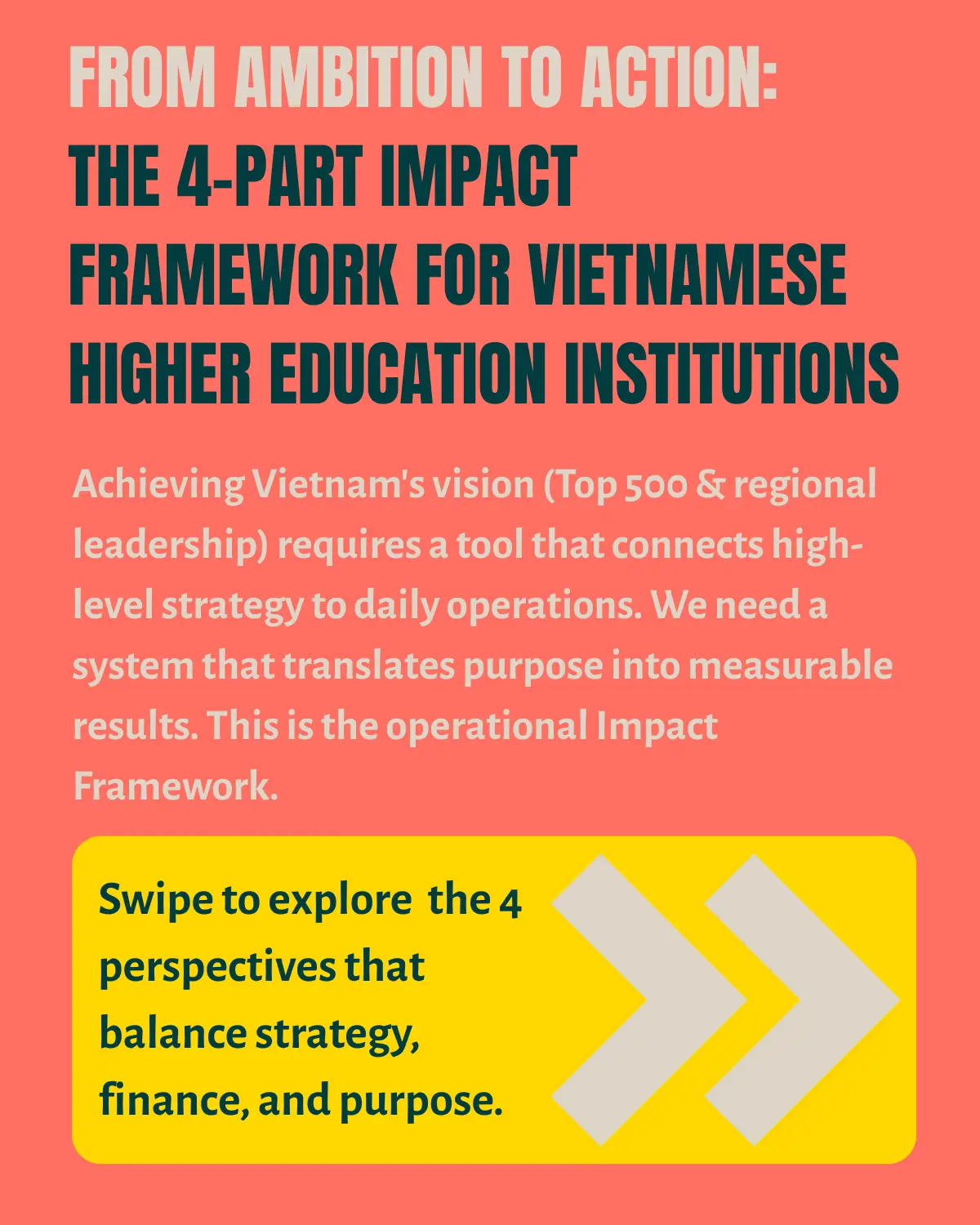
A Roadmap: Building an Impact-Focused Performance Framework
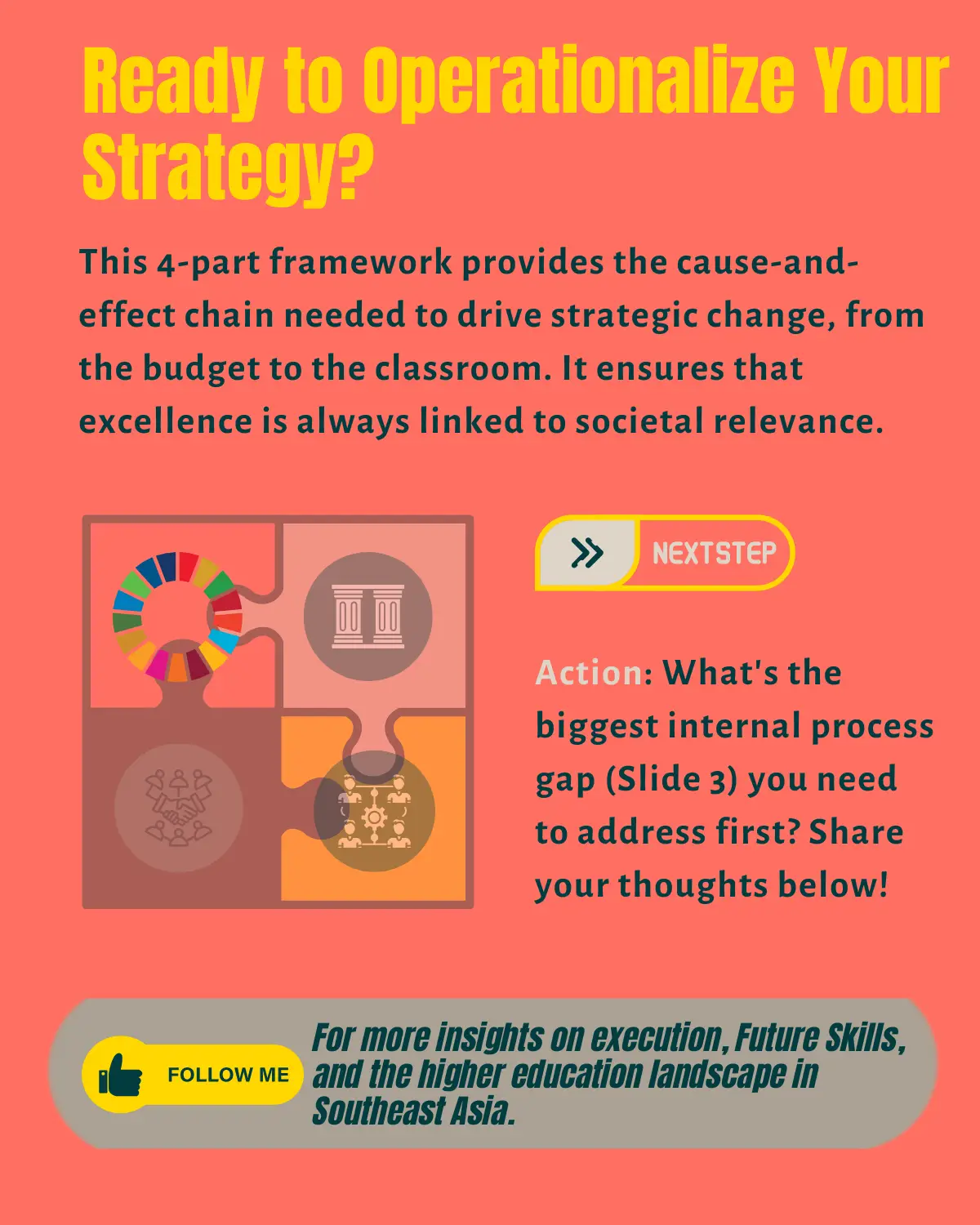
To close the operational gap and achieve alignment from strategy to execution, universities benefit from an integrated performance framework that connects institutional vision with measurable outcomes. Such a framework typically includes:
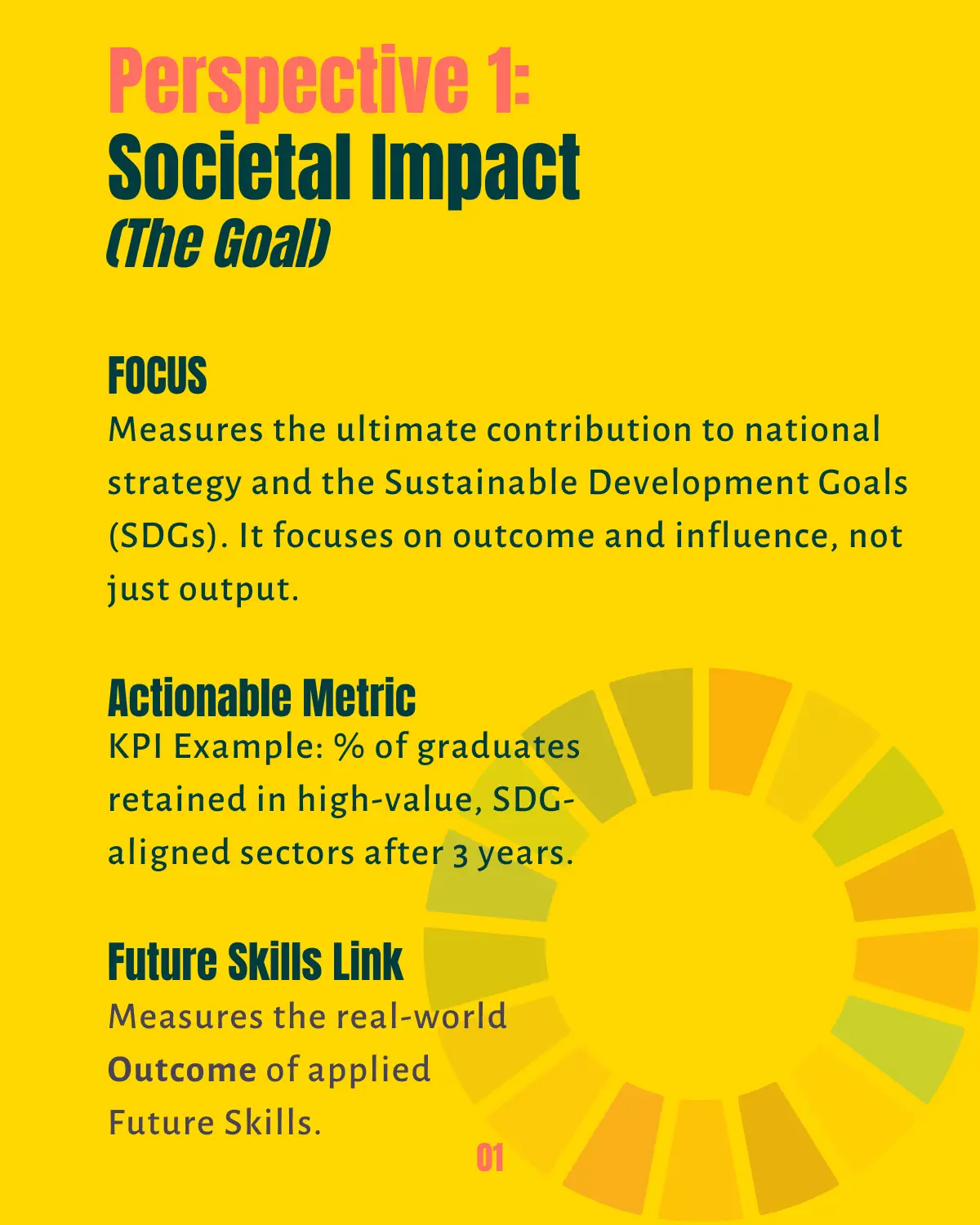
1. Societal Impact (The Why)
The institution’s long-term contribution to economic development, social progress, environmental sustainability, and community wellbeing.
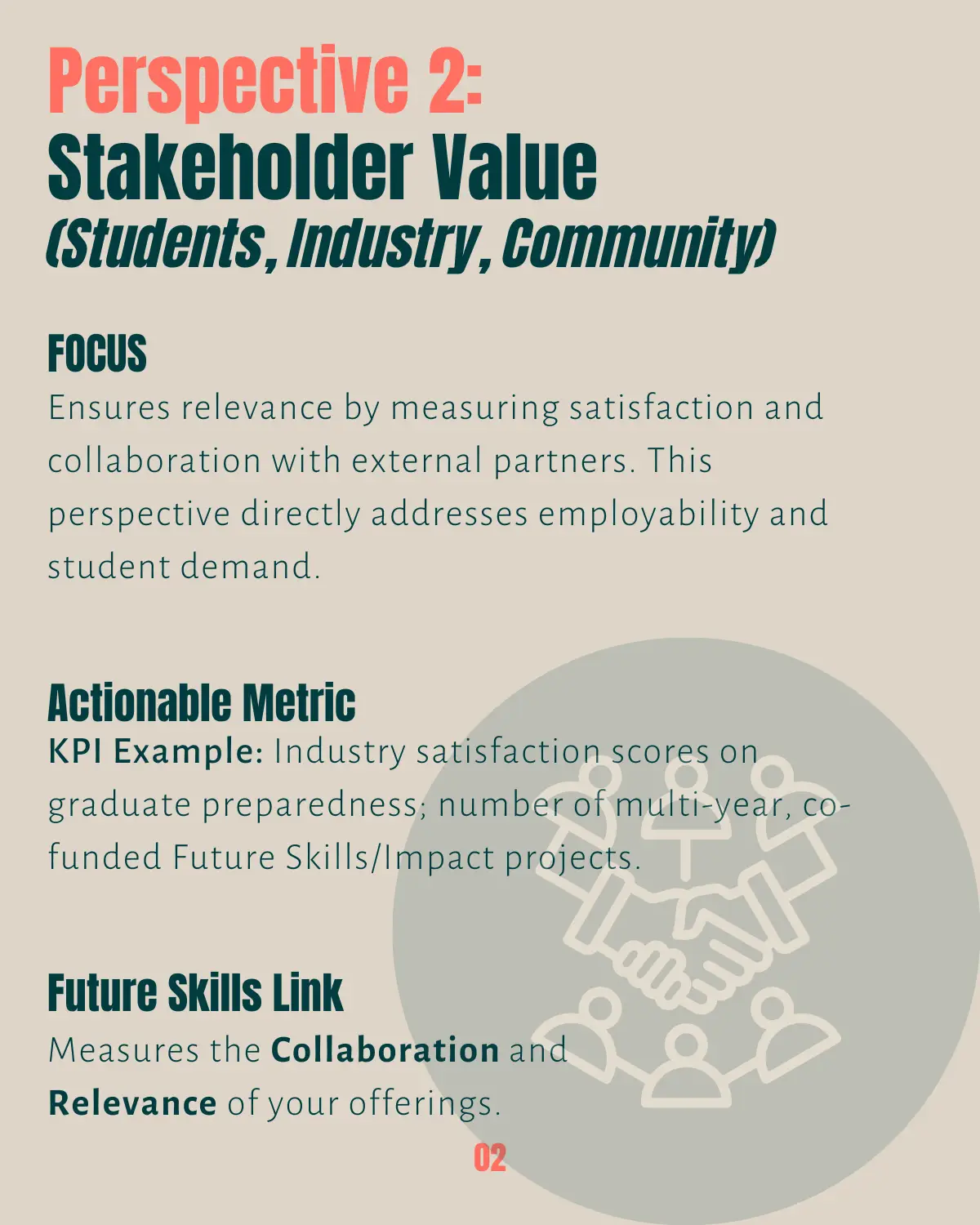
2. Stakeholder Value (The External Focus)
Collaboration and value creation with students, employers, and community partners.
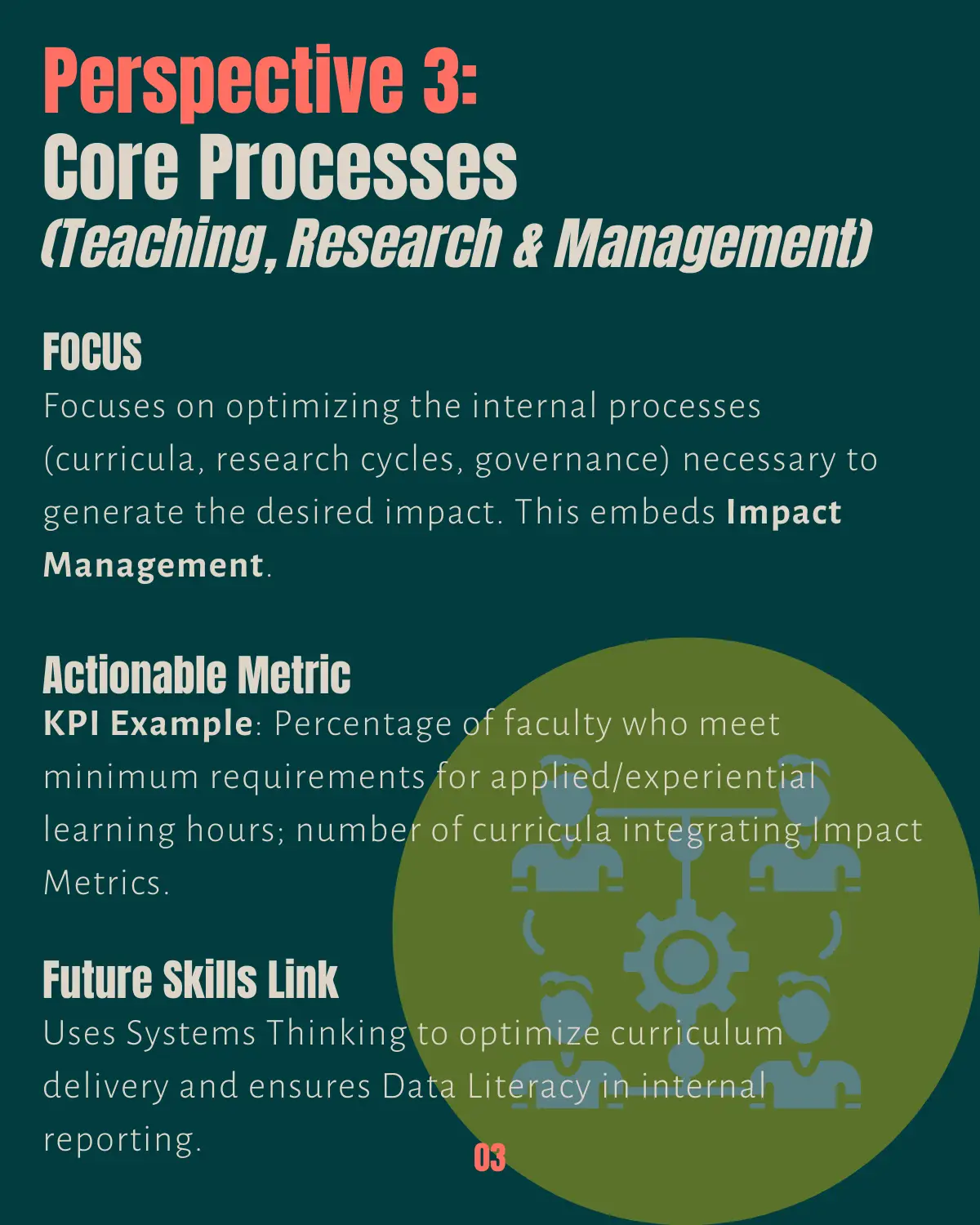
3. Core Processes (The Internal How)
Teaching, research, governance, and student support processes aligned with intended outcomes.
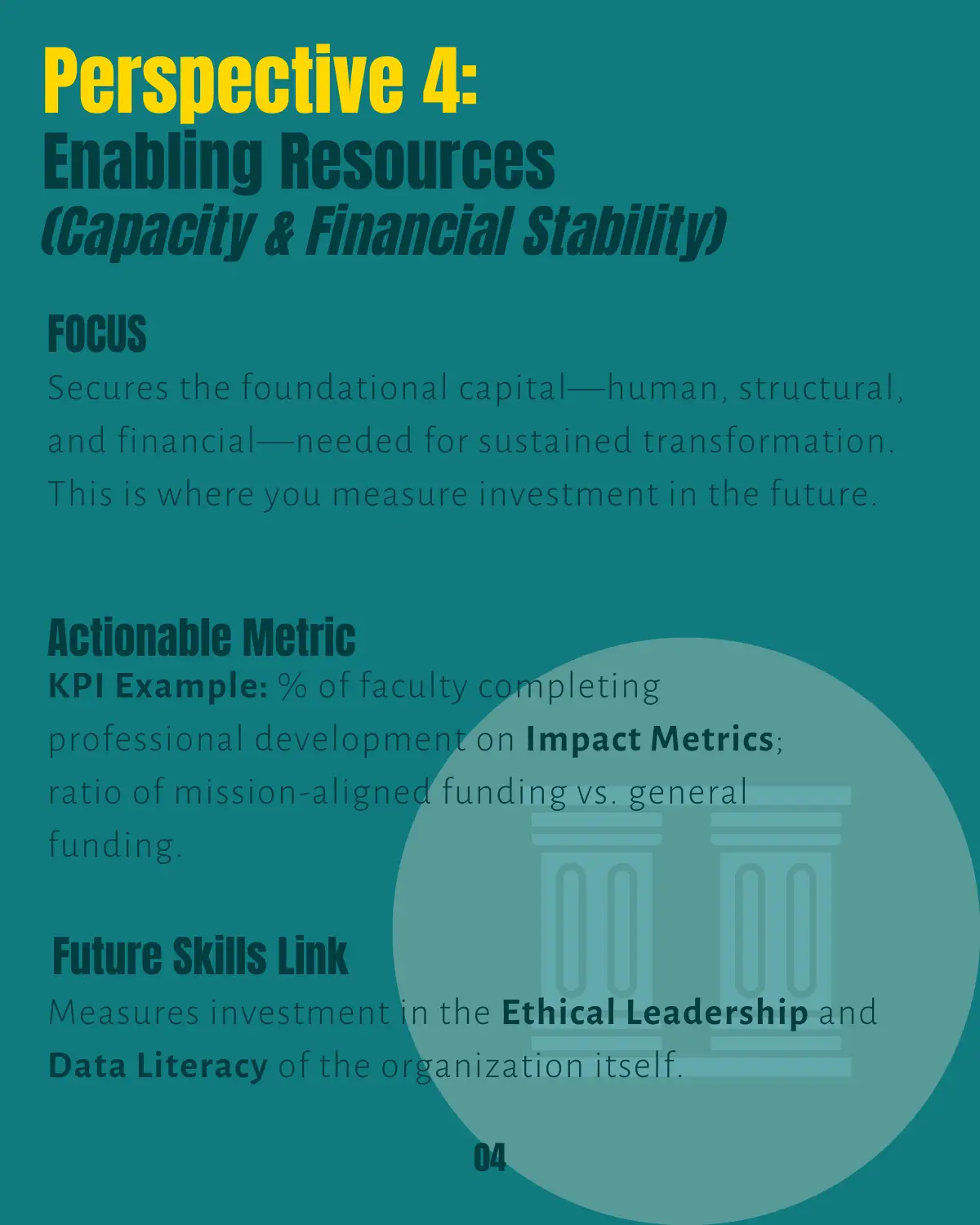
4. Enabling Resources (The Foundation)
Institutional capacity, faculty development, financial stability, and—critically—Future Skills integrated across the learning experience.
This approach translates aspirations—such as joining the top 500—into operational reality.
Conclusion
Vietnam’s higher education transformation cannot be measured solely by ranking outcomes. It must be defined by the deeper alignment between competence and conscience. Future Skills and Impact Management provide essential tools, but it is a comprehensive, impact-focused framework that enables institutions to execute their vision effectively.
By strengthening alignment across strategy, capability, and societal value, Vietnamese universities can position themselves not only for global recognition but for meaningful, long-lasting impact.