Vietnam’s higher education system is entering a period of accelerated transformation. Recent national strategies—including Resolution 29/NQ-TW, the Education Development Strategy 2030–2045, the Scheme for International Integration in Education (Decision 1600/QĐ-TTg), and the expanded higher education network outlined in Decision 452/QĐ-TTg—signal a strong commitment to modernisation, applied learning and employability. Within this reform landscape, dual study programs, long established in Germany, offer valuable inspiration for Vietnam’s evolving approach to practice-oriented higher education.
1. The Dual Study Concept: Integrating Academic Learning and Real-World Experience
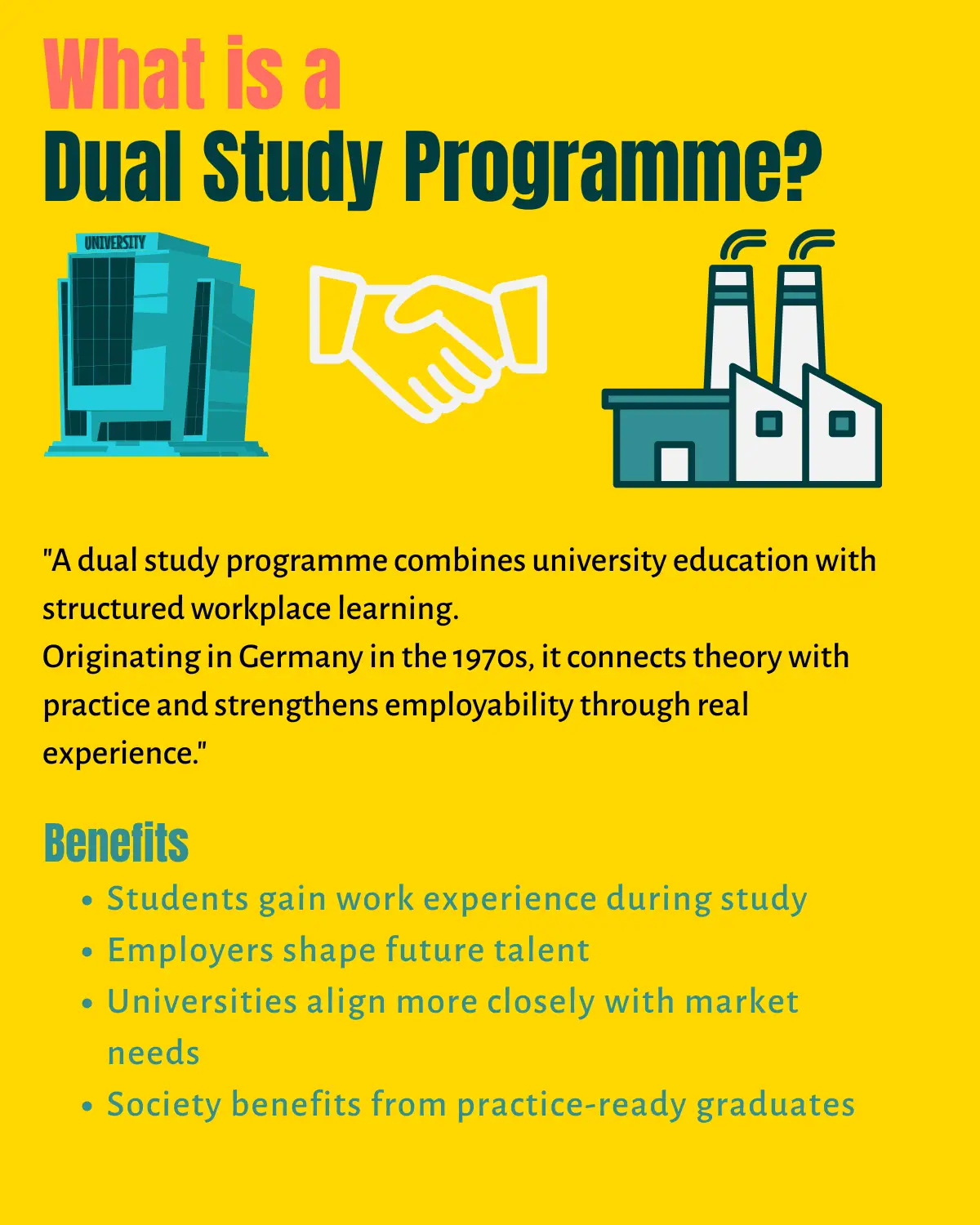
Dual study programs combine university-level education with structured, paid training phases in partner companies. Students alternate between academic coursework and supervised workplace experience, enabling them to graduate with both theoretical knowledge and practical competence.
Core characteristics include:
Integrated academic and company-based training
Mandatory practice periods aligned with curriculum content
Regular alternation between theory and practice blocks
Full academic degree (typically Bachelor level)
Remuneration during practical phases
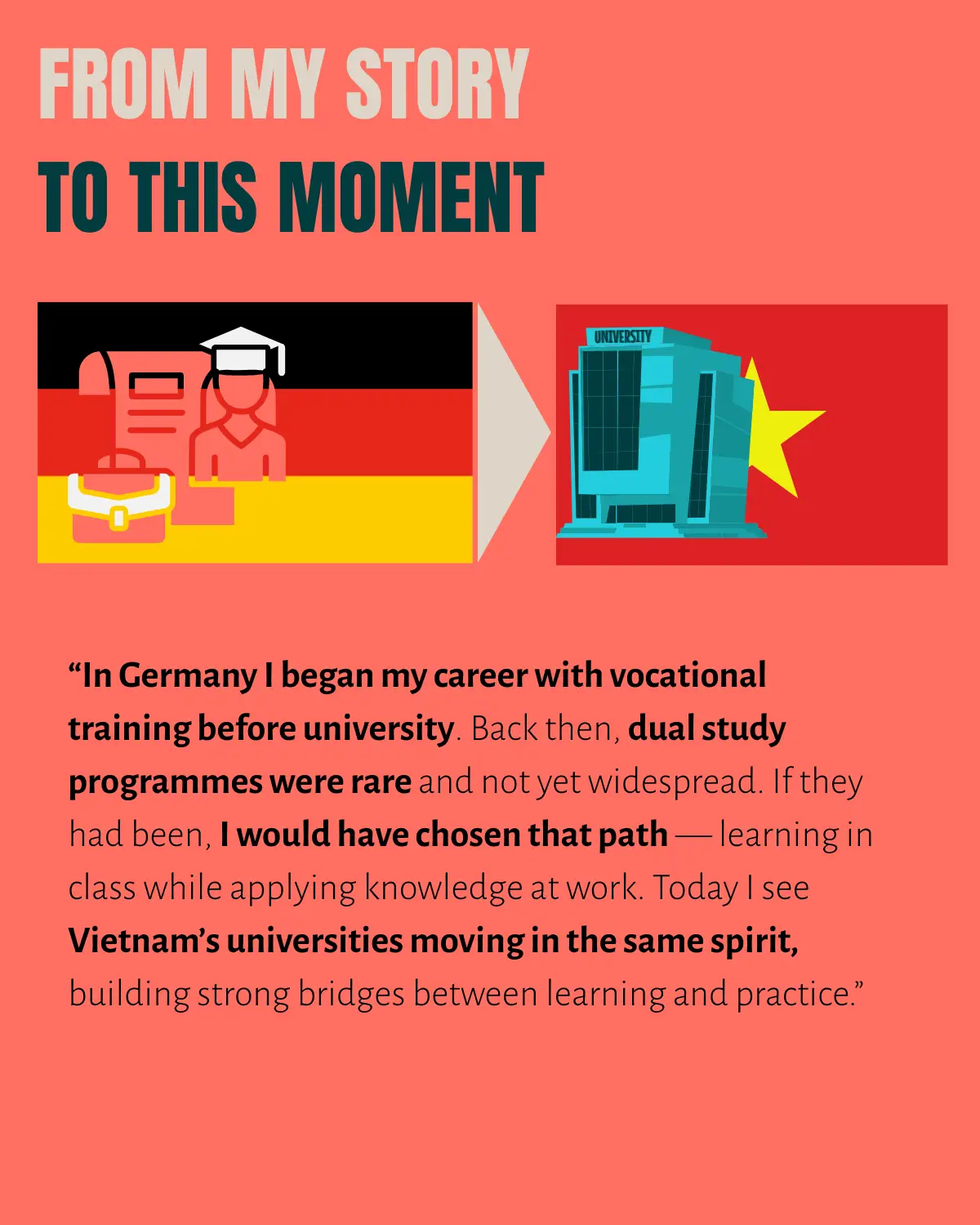
In Germany, this model has proven effective in technical, engineering, and business disciplines, helping address skill shortages, strengthening institutional–industry cooperation and improving graduate readiness.
2. Vietnam’s Progress Toward Practice-Oriented Education
Vietnam has already laid a strong policy foundation for more applied learning:
Resolution 29/NQ-TW (2013): Emphasises linking theory with practice and fostering creativity.
Conclusion 91-KL/TW (2024): Reinforces the move toward practice-oriented and outcome-focused programs.
Education Development Strategy 2030–2045: Prioritises employability, STEM disciplines and international integration.
Decision 1600/QĐ-TTg (2024): Enhances international cooperation and best-practice adoption.
Decision 452/QĐ-TTg (2025): Expands higher education capacity and strengthens regional networks.
Practical examples already exist:
Bosch Vietnam delivers dual vocational training with up to 75% practice.
RMIT Vietnam integrates mandatory internships across its programs.
HaUI and other universities have expanded industry partnerships, particularly in engineering and applied sciences.
These initiatives show that Vietnam is not adopting dual study models from scratch; rather, it is adapting and extending existing practice-oriented structures.
3. Addressing the Skill Gap: Why Dual Study Programs Matter
A Fulbright–AmCham study indicates that only 15% of employers consider graduates fully job-ready. Key gaps include:
problem-solving
communication
interdisciplinary collaboration
practical experience
workplace readiness
Dual study programs help close these gaps by:
embedding hands-on learning in real company environments
strengthening technical and transversal skills
reducing employer retraining needs
creating a shared talent pipeline between universities and industry
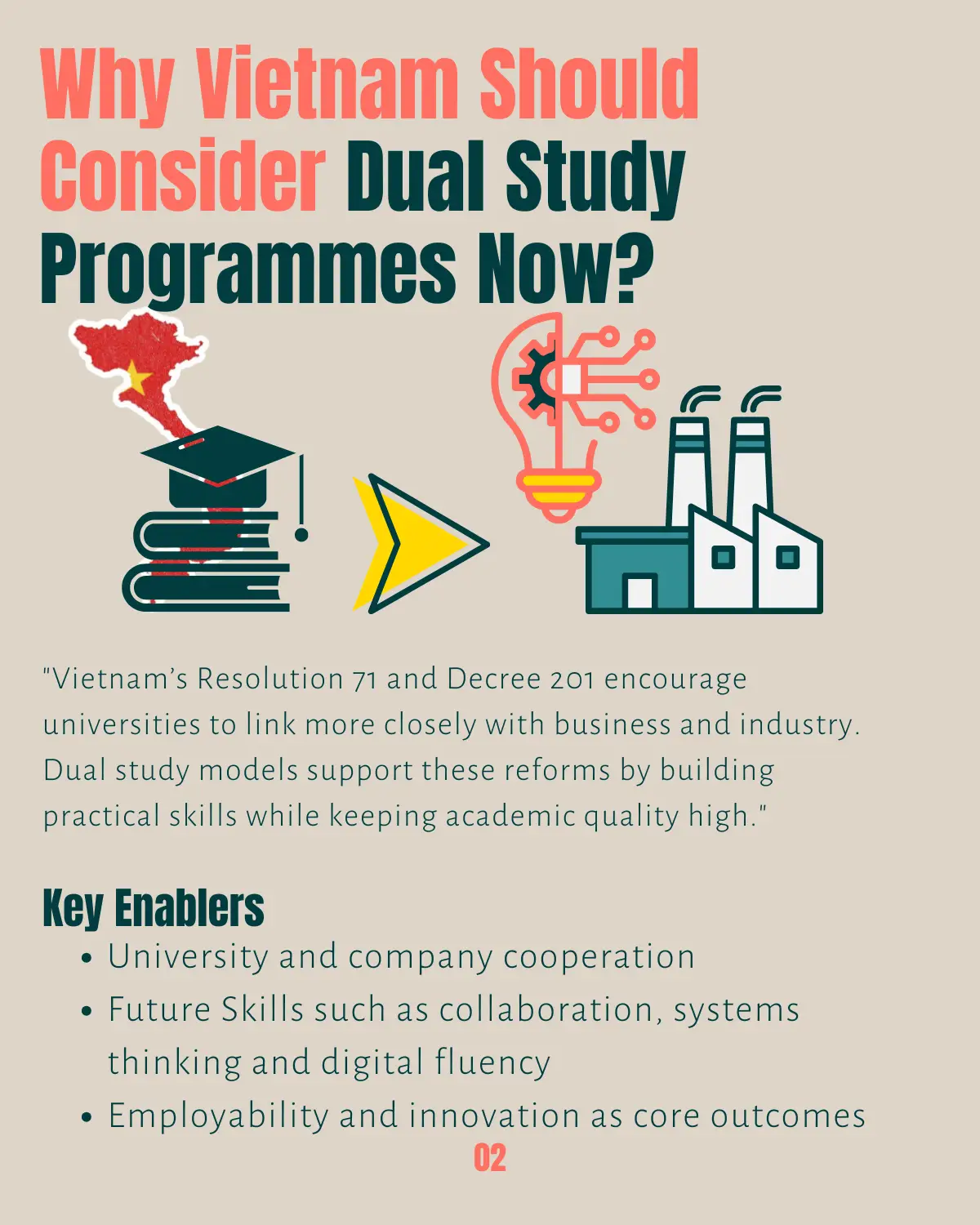
Vietnam’s policy direction—toward practice-based, outcome-oriented education—aligns strongly with the dual study approach.
4. International Cooperation: Partnership, Not Transplantation
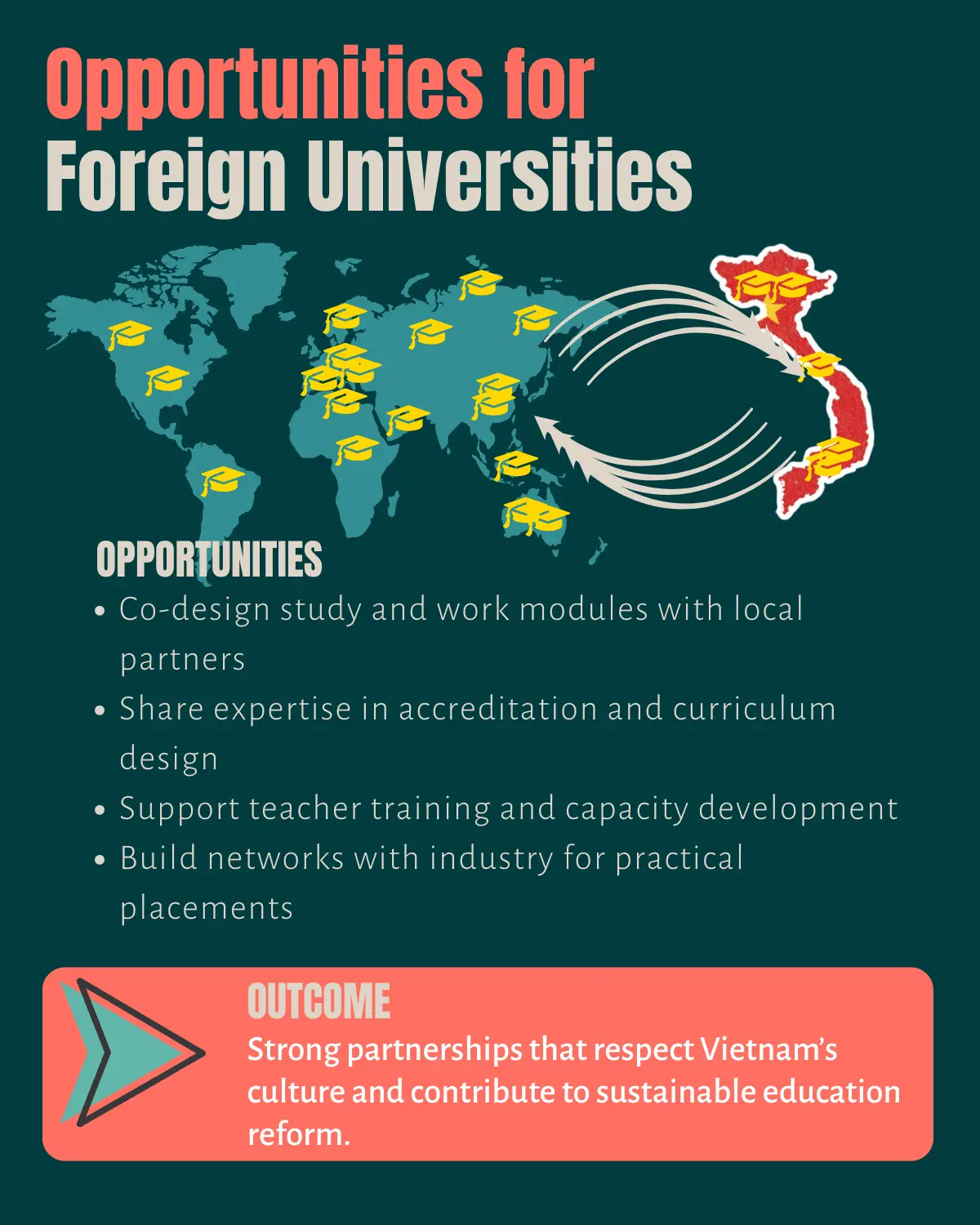
For foreign universities, companies and investors, dual study development offers opportunities to contribute meaningfully to Vietnam’s reform priorities.
International partners can:
support curriculum development and work-integrated learning models
build institutional capacity for dual education infrastructure
facilitate links between companies and universities
ensure programs are adapted for Vietnam’s context rather than directly imported
These collaborations can help Vietnam accelerate its progress toward a more skilled, innovation-driven workforce aligned with the 2045 national vision.
5. Benefits for Vietnamese Universities
Strengthening dual study pathways offers multiple institutional advantages:
increased attractiveness to students and families
stronger, more sustainable partnerships with employers
improved graduate employability and institutional reputation
alignment with national policy goals and quality standards
contribution to Vietnam’s competitiveness and inclusive development
6. Moving from Policy to Practice
Vietnam’s political and regulatory environment already supports innovation in higher education. To translate this into daily practice, institutions can focus on:
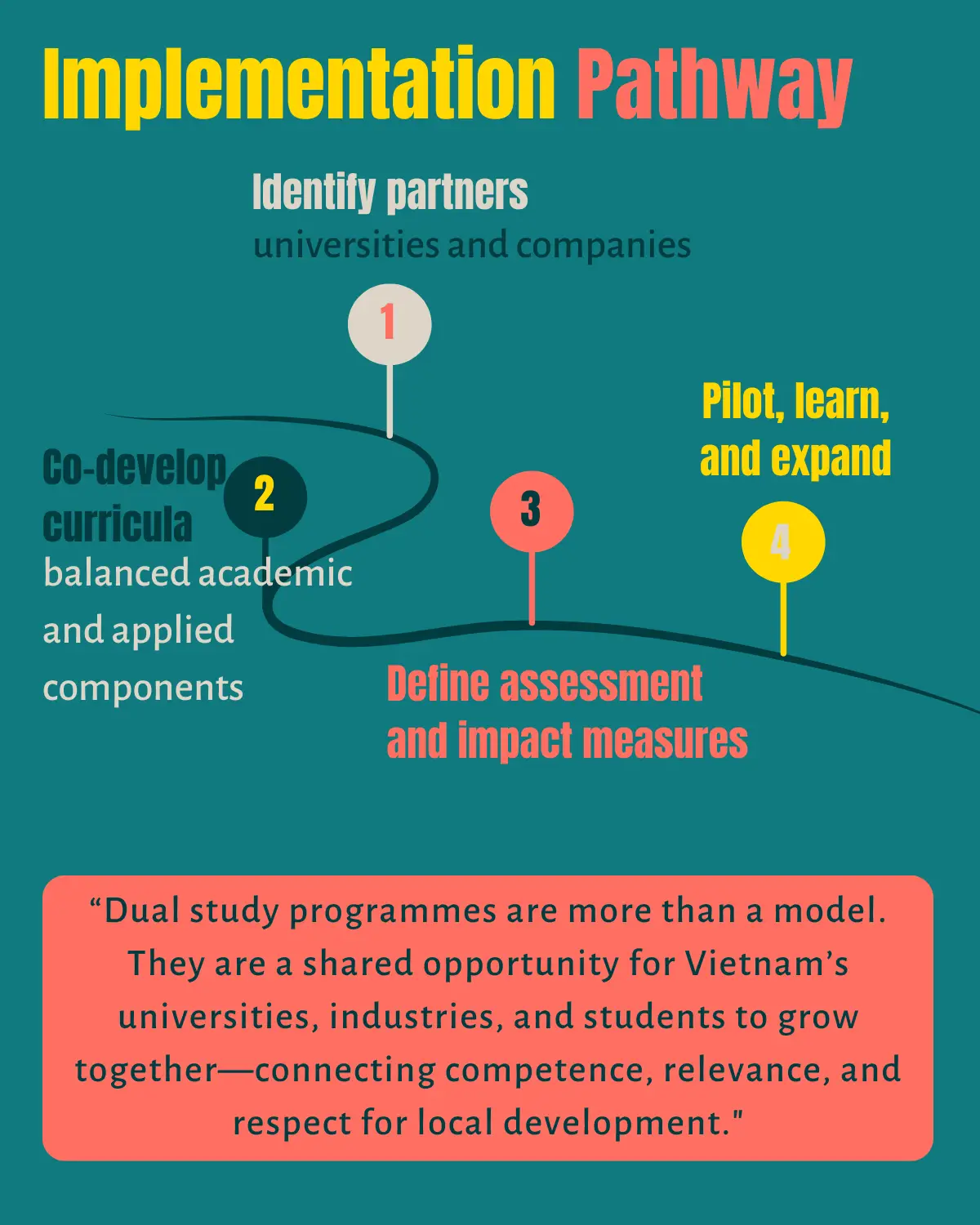
expanding structured industry collaboration
integrating modular, work-based learning into curricula
strengthening digital platforms that support flexible learning
building faculty capacity in applied pedagogy
developing quality assurance systems for workplace learning
engaging companies in co-supervision and co-assessment
These steps enable universities to move beyond traditional academic models and toward practice-oriented systems that respond to employer needs and national priorities.
Conclusion
Vietnam’s higher education reforms present a unique opportunity to advance practice-oriented learning and strengthen links between universities and industry. Dual study programs provide a proven, adaptable model for achieving these goals. With coordinated efforts between higher education institutions, businesses and international partners, Vietnam can develop a system that is globally connected, locally relevant and strategically positioned to support the country’s transformation toward 2045.