
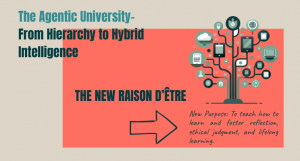
What If Universities Became Agentic Organisations?
What if universities moved beyond hierarchy toward agentic, outcome-driven models supported by AI? This shift could redefine governance, teaching and administration—raising fundamental questions about autonomy, integrity and the future role of higher education.
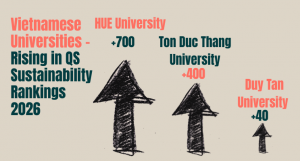
From Rankings to Readiness: Sustainability as an Institutional Capability
What if universities became agentic organisations supported by AI? This shift could redefine governance, teaching and administration in higher education.

Vietnam’s Higher Education System Enters a New Phase of Reform
Vietnam’s higher education system is entering a new phase marked by clearer institutional profiles, stronger quality assurance, and long-term development priorities.
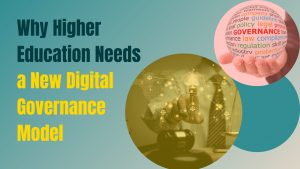
Why Higher Education Needs a New Digital Governance Model: Lessons from Germany and Vietnam
Across my work with higher education institutions in Europe and Southeast Asia, I keep encountering the same pattern: digital transformation is treated as a technology project, not an organizational one. And this misunderstanding is now one of the biggest barriers to meaningful progress.
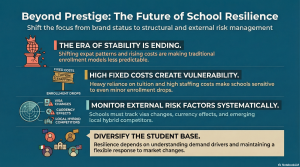
Beyond Prestige: What Really Determines the Resilience of International Schools in Southeast Asia
International schools in Southeast Asia have long benefited from stable demand driven by expat populations, rising local affluence, and the perceived value of global education pathways. But this stability is beginning to shift. As mobility patterns change, international study becomes less predictable, and affordability pressures rise, schools are operating in a more complex and volatile environment. This raises a critical question: what truly makes an educational institution resilient—not just attractive—from the outside?
From Curiosity to Impact – a framework for Transformative Education
What happens when we stop seeing learning as the delivery of knowledge and start viewing it as a process of inquiry? This essay tells the story of how a conversation in a school leadership team grew into a framework that connects curiosity, research and real-world impact.
A New Era for Higher Education: Implications of Circular 07/2025 for Vietnam’s Universities
Circular 07/2025 introduces clear regulations for joint training programs in Vietnam. It defines delivery models, partner responsibilities and compliance standards, strengthening transparency and shaping future international cooperation.
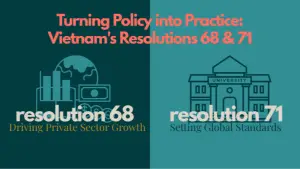
Vietnam at 80: Higher Education at the Intersection of Resolution 68 and Resolution 71
Vietnam’s higher education system is entering a new phase shaped by Resolution 68 and Resolution 71 simultaniously.
Universities that strengthen governance, industry partnerships and digital capability will be positioned for long-term success.
Dual Study Programs: A Shared Opportunity to Strengthen Practice-Oriented Higher Education in Vietnam
Dual study programs offer Vietnam a powerful model for practice-oriented higher education. Aligning universities, employers and policy reforms can strengthen skills, employability and national competitiveness to 2045.
Beyond the Top 500: Why Strategic Impact Alignment Matters for Vietnamese Universities
Vietnamese universities are aiming for global visibility, but long-term success depends on strategic impact alignment, Future Skills integration, and outcome-based performance frameworks that connect vision with societal value.
Education in Times of Disruption: Andreas Schleicher on the Future of Schools and Learning
In his article “Bildung im Epochenbruch”, Andreas Schleicher reflects on how schools must evolve beyond traditional models focused primarily on standardized knowledge transfer. Instead, he highlights the growing importance of adaptability, critical thinking, collaboration, and the capacity for lifelong learning.
Nicht KI ist das Risiko – zu langsame Anpassung ist es
Dieser Beitrag trifft einen zentralen Nerv der aktuellen Bildungsdebatte: Künstliche Intelligenz ist kein weiteres digitales Zusatzthema, sondern verändert grundlegende Fragen von Lernen, Leistung und Bewertung. Genau deshalb reicht es nicht, KI mit einzelnen Projekten oder Verboten zu beantworten.

Schule der Zukunft: „Unterricht ist anspruchsvoll, daher braucht man ein Team, um ihn richtig gut zu machen“
Der Beitrag zeigt einmal mehr: Gute Schule ist kein Erkenntnisproblem, sondern ein Umsetzungsproblem. Viele der beschriebenen Ansätze sind längst bekannt und werden in einzelnen Schulen bereits erfolgreich praktiziert.
Die eigentliche Herausforderung liegt darin, Unterricht und Schulorganisation so zu gestalten, dass Zusammenarbeit nicht die Ausnahme bleibt, sondern zum Standard wird. Solange gute Praxis von einzelnen Akteuren abhängt, bleibt systemische Wirkung begrenzt.
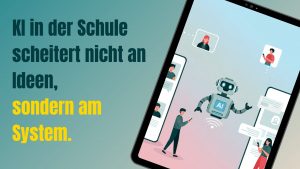
Trendmonitor Spezial: Regelungen zur schulischen KI-Nutzung im Überblick
Der aktuelle Trendmonitor bestätigt viele bereits bekannte Erkenntnisse zum Einsatz von KI in Schulen: Es fehlt weniger an Konzepten als an klarer Umsetzung im Alltag.
Aus meiner Sicht liegt die eigentliche Herausforderung weniger in neuen Studien als vielmehr in den strukturellen Rahmenbedingungen – von fehlender Fortbildung über rechtliche Unsicherheiten bis hin zu begrenzten Ressourcen im System Schule. KI wird so schnell zur Frage einzelner engagierter Akteure statt zu einer systematisch verankerten Kompetenz.
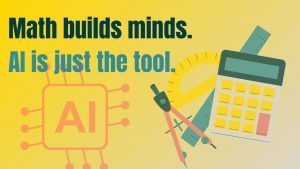
Former Grok 3 engineer urges schools to prioritize math over specialized AI classes
This article highlights a debate currently shaping many education systems: should schools introduce dedicated AI subjects, or focus more on strengthening foundational competencies?
I tend to agree with the view presented here that mathematical and analytical thinking provide the more sustainable foundation. At the same time, I believe AI should not be taught as a standalone subject, but rather integrated as a tool across learning processes – as a capability for lifelong learning, not a short-lived trend.
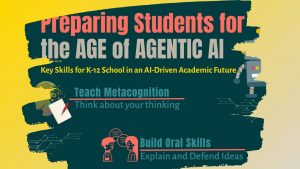
Agentic AI in Education — What Schools Need to Prepare Students For
Agentic AI is changing how universities assess learning. This curated summary explains what schools must teach today so students can thrive in tomorrow’s AI‑driven academic world.

Zehn Hebel für die Schule der Zukunft – Was die Serie zeigt, was international gilt und was Deutschland daraus machen kann
Die Artikelserie „Zehn Hebel für die Schule der Zukunft“ zeigt eindrucksvoll, wie moderne Bildung gelingen kann – wissenschaftlich fundiert, international anschlussfähig und weit entfernt von tradierten deutschen Schulstrukturen. Im Zentrum stehen neurobiologische Erkenntnisse, die Bedeutung von Beziehung und psychologischer Sicherheit, kompetenzorientiertes Lernen, flexible Lernräume, Bewegung und Rhythmisierung, pädagogische Führung sowie ein inklusives Verständnis von Leistung. Der internationale Vergleich macht deutlich: Viele erfolgreiche Bildungssysteme setzen diese Prinzipien längst um. Für Deutschland bedeutet das einen Paradigmenwechsel – weg von Stofffülle, Selektion und Belehrung, hin zu Lernarchitektur, Inklusion und echter Schulentwicklung. Die Serie zeigt zugleich konkrete Wege, wie Schulen diesen Wandel praktisch gestalten können.
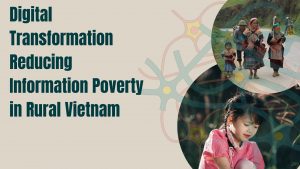
Digital Transformation Reducing Information Poverty in Rural Vietnam
Vietnam’s digital transformation strategy is reducing information poverty in remote and mountainous regions by expanding access to education, digital skills, and public services. Through coordinated national policies and community-level implementation, digital inclusion is becoming a structural driver of rural development and social equity.
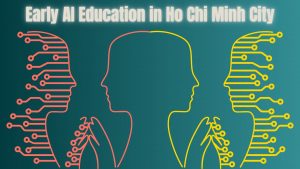
Early AI Education in Ho Chi Minh City: What International Schools Need to Learn from the Public Sector
Ho Chi Minh City’s public schools are rapidly integrating AI into their curricula — with impressive results. This early adoption is reshaping expectations for digital literacy and future skills. For international schools, the message is clear: the competitive landscape is shifting, and proactive AI integration is becoming a strategic necessity.
International Standards Strengthen Vocational Education in Ho Chi Minh City
Vietnam continues to strengthen vocational education through international accreditation. Eight programmes in Ho Chi Minh City have reached global standards, reinforcing quality, employability and long-term economic development.